Sternocleidomastoid: origin, insertion, nerve supply and action
Also called: SCM, sternomastoid
Quick answer
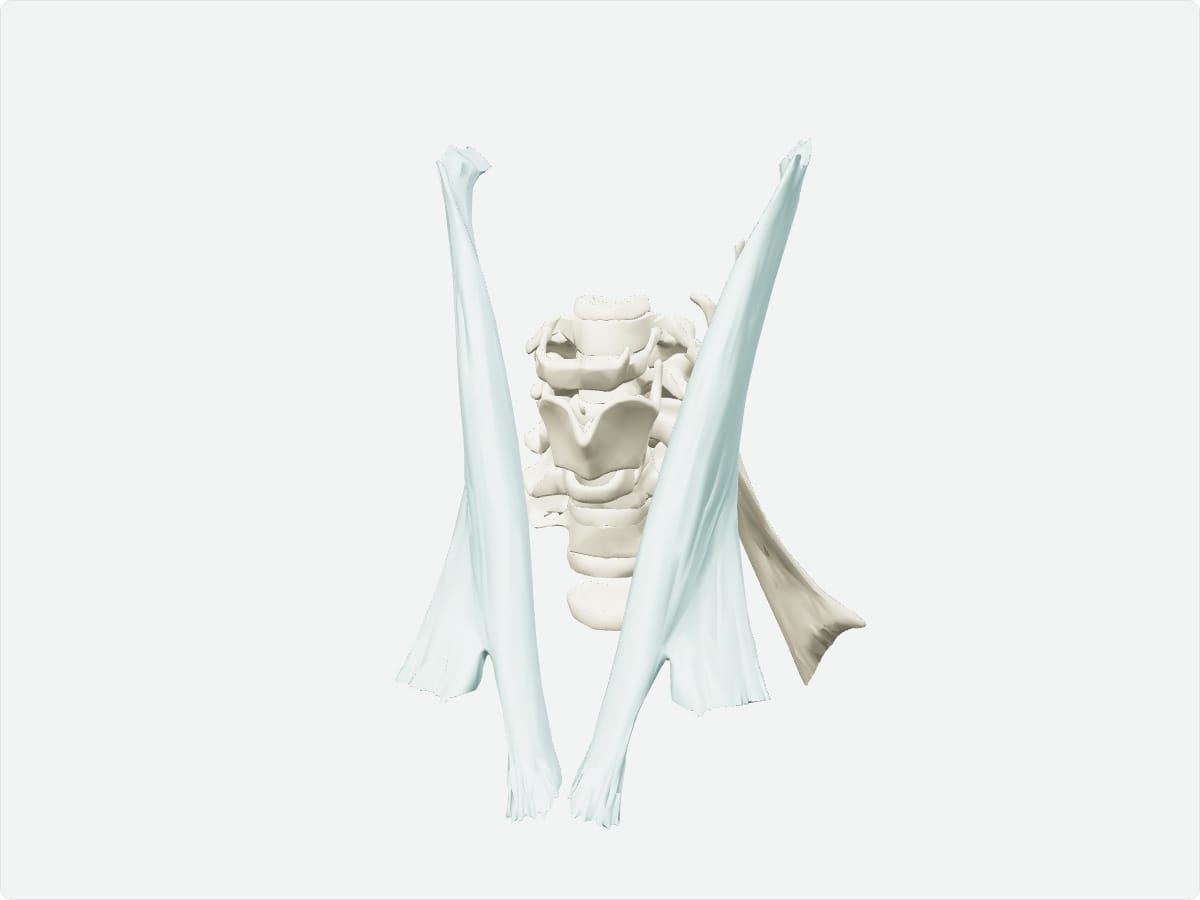
The sternocleidomastoid is the prominent muscle running obliquely across the side of the neck. It arises from the manubrium of the sternum and the medial clavicle and inserts on the mastoid process and superior nuchal line. The accessory nerve supplies it. One side turns the head to the opposite side, and both sides flex the neck.
Key facts
Origin
Sternal head: manubrium of the sternum. Clavicular head: medial third of the clavicle.
Insertion
Lateral surface of the mastoid process and lateral half of the superior nuchal line.
Innervation
Spinal accessory nerve (cranial nerve XI) for motor; C2-C3 for proprioception.
Blood supply
Occipital artery and posterior auricular artery (upper part); superior thyroid artery (middle); suprascapular artery (lower).
Action
One side: tilts the head to the same side and rotates the face to the opposite side. Both sides: flex the neck and, with the head fixed, elevate the sternum in forced inspiration.
3D model: BodyParts3D (CC BY 4.0), adult male reference anatomy. Highlighted structure shown with nearby bones for context.
About the sternocleidomastoid
The muscle divides the neck into the anterior and posterior triangles and is the key surface landmark for the carotid sheath and many neck procedures.
Clinical relevance
Congenital muscular torticollis results from shortening or fibrosis of one sternocleidomastoid, tilting the head to the affected side.
Frequently asked questions
What is the origin of the sternocleidomastoid?
The sternal head arises from the manubrium and the clavicular head from the medial clavicle.
What does the sternocleidomastoid do?
It turns the head to the opposite side and tilts it to the same side; both sides together flex the neck.