Home / Anatomy / Upper limb / Clavicle Clavicle: anatomy, landmarks and articulations Clavicula
Also called: collarbone
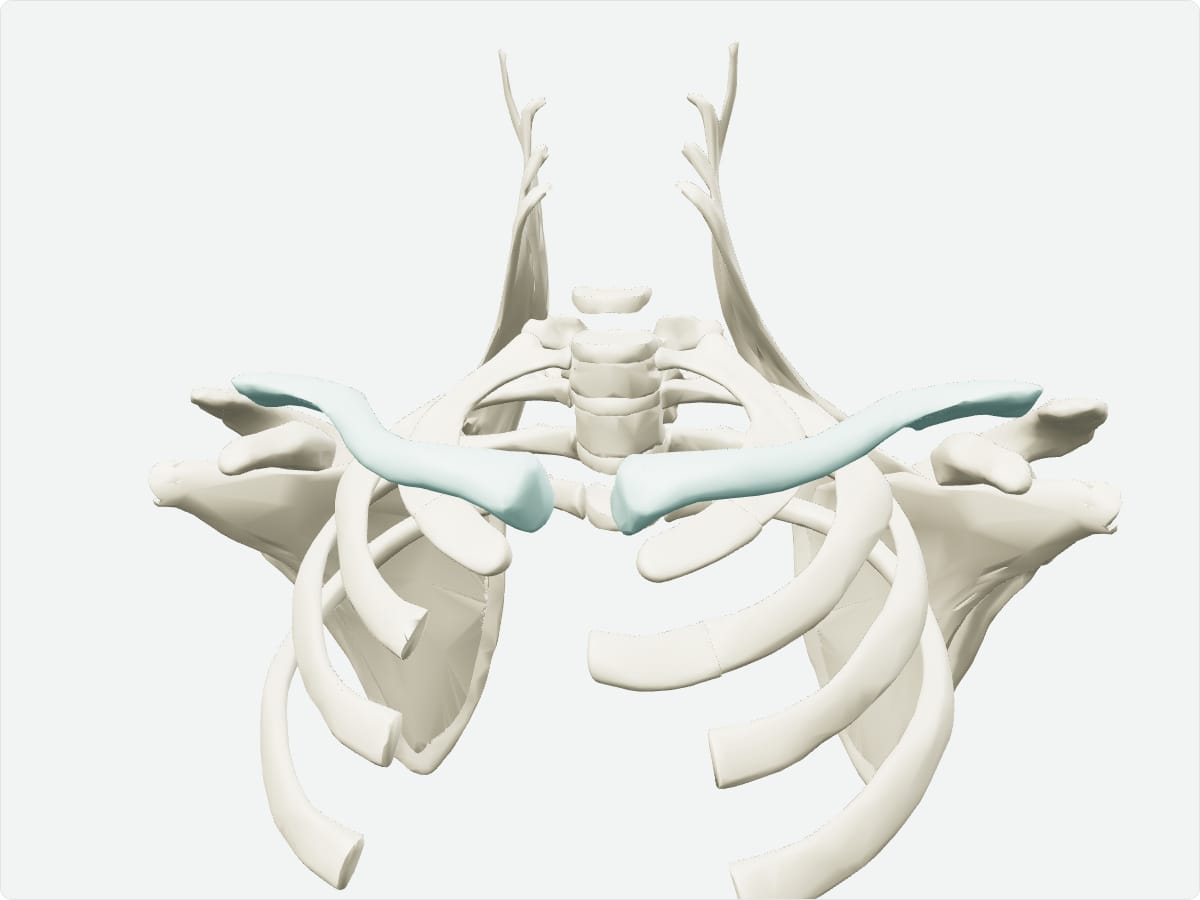
Quick answer The clavicle, or collarbone, is an S-shaped bone that connects the shoulder girdle to the sternum. It articulates medially with the manubrium at the sternoclavicular joint and laterally with the acromion at the acromioclavicular joint. It acts as a strut that holds the shoulder away from the trunk.
Key facts Type Long bone (irregular shaft, no medullary cavity). Location Horizontal, at the base of the neck, above the first rib. Landmarks Sternal end, acromial end, conoid tubercle, trapezoid line, subclavian groove. Articulations Sternum (sternoclavicular joint) and scapula (acromioclavicular joint). Muscle attachments Sternocleidomastoid, pectoralis major, deltoid, trapezius, subclavius.
Explore in 3D 3D model: BodyParts3D (CC BY 4.0), adult male reference anatomy. Highlighted structure shown with nearby bones for context.
About the clavicle It is the first bone to ossify in the embryo and one of the most frequently fractured bones, usually at the junction of the middle and lateral thirds.
Clinical relevance Midshaft clavicle fractures usually follow a fall onto the shoulder and displace the medial fragment upward because of sternocleidomastoid. Frequently asked questions Where do clavicle fractures usually occur? At the junction of the middle and lateral thirds, its weakest point.
What joints does the clavicle form? The sternoclavicular and acromioclavicular joints.
Study with AI Ask the tutor AI quiz
Answers come only from reviewed Anatly pages and can still contain mistakes. Not medical advice.
Where do clavicle fractures usually occur? What joints does the clavicle form?
Reviewed by Anatly Team on October 1, 2026. How we review content .
Last updated September 30, 2026. Educational use only; not medical advice. Sources are listed on the sources page .