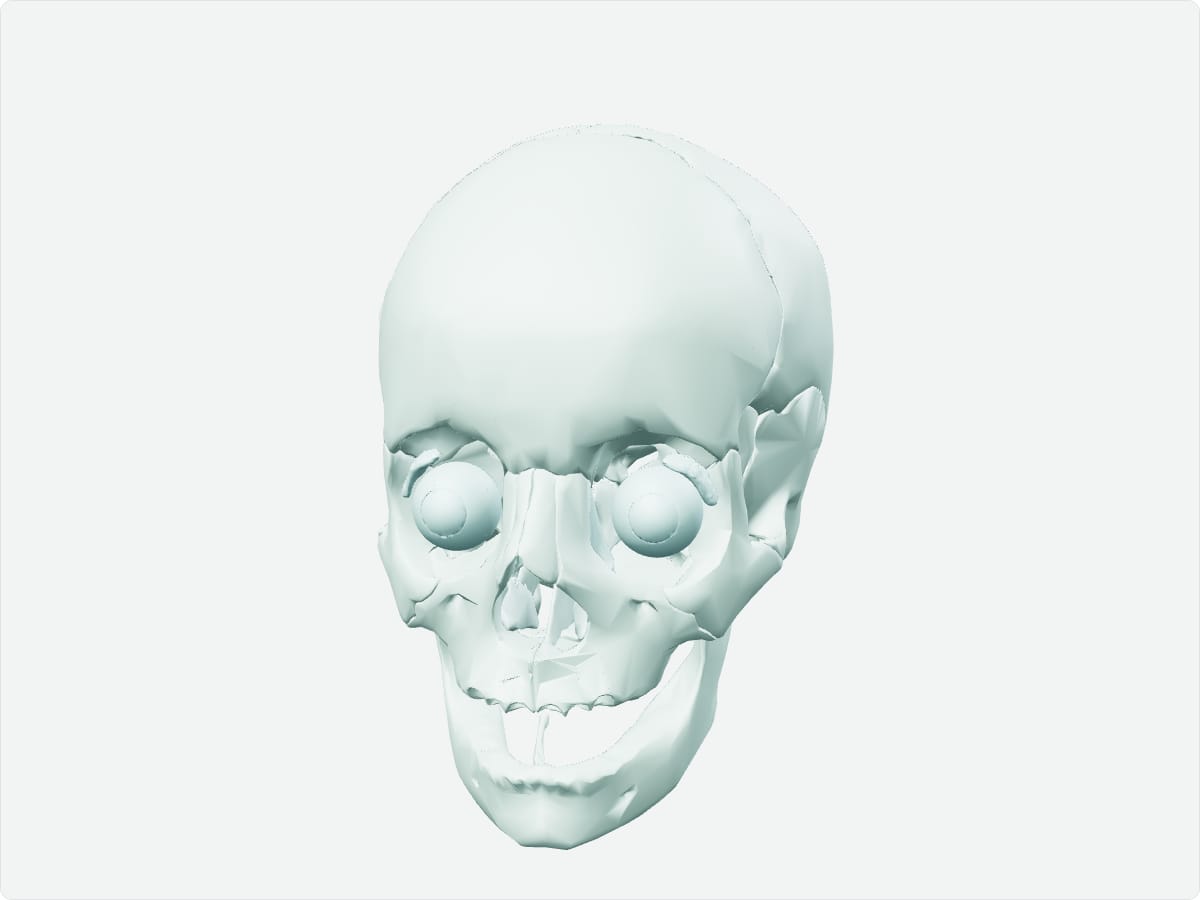
Home / Anatomy / Head and neck / Skull Skull: anatomy, landmarks and articulations Also called: cranium
Quick answer The skull is the bony framework of the head. It has a neurocranium that protects the brain and a facial skeleton. The neurocranium includes the frontal, parietal, temporal, occipital, sphenoid and ethmoid bones, joined by immovable sutures, and the mandible is the only movable bone.
Key facts Type Composite of flat and irregular bones. Location Head, above the cervical spine. Landmarks Sutures (coronal, sagittal, lambdoid), foramen magnum, orbits, nasal cavity, zygomatic arch, mastoid process, external occipital protuberance, cranial fossae. Articulations Atlas (atlanto-occipital joints) and mandible (temporomandibular joints). Muscle attachments Sternocleidomastoid, trapezius, temporalis, masseter and many facial muscles.
Explore in 3D 3D model: BodyParts3D (CC BY 4.0), adult male reference anatomy. Highlighted structure shown with nearby bones for context.
About the skull The 3D model combines the cranial and facial bones and the teeth. The foramina of the skull transmit the cranial nerves and blood vessels.
Clinical relevance Fractures of the pterion, where four bones meet, can tear the middle meningeal artery and cause an epidural hematoma. Frequently asked questions How many bones are in the skull? Usually 22 bones in the skull, including 8 cranial bones and 14 facial bones, not counting the ossicles or hyoid.
What is the foramen magnum? The large opening in the occipital bone through which the spinal cord passes.
Draft: this page has not yet been through editorial review. Read our review process .
Last updated September 30, 2026. Educational use only; not medical advice. Sources are listed on the sources page .