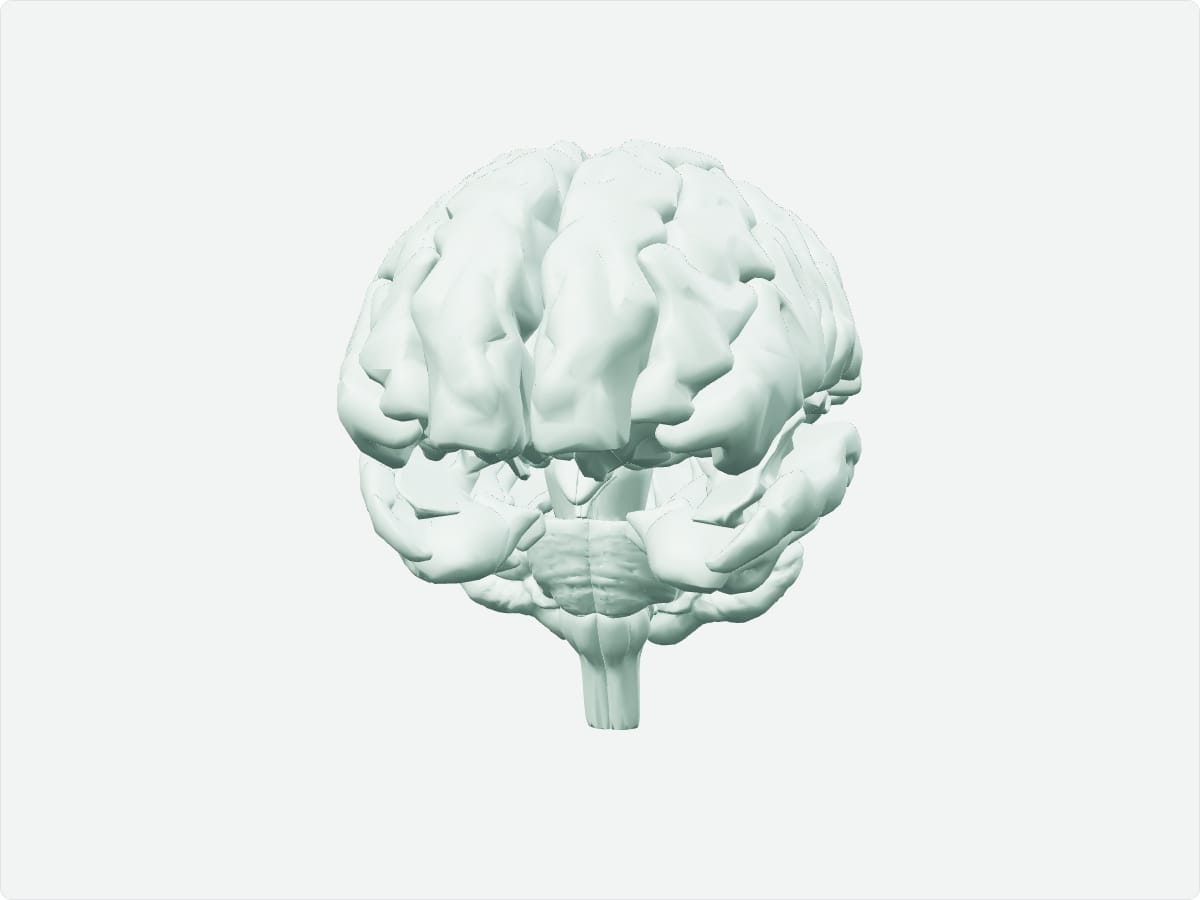
The brain is the control centre of the nervous system, protected by the skull and meninges. It has a cerebrum that handles thought, language and voluntary movement, a cerebellum for coordination and a brainstem that regulates breathing and heart rate. Cerebrospinal fluid cushions it, and the carotid and vertebral arteries supply it.
Key facts
Location
Cranial cavity, surrounded by the meninges and cerebrospinal fluid.
Structure
Cerebrum (two hemispheres with frontal, parietal, temporal and occipital lobes), diencephalon, brainstem (midbrain, pons, medulla) and cerebellum; ventricles containing cerebrospinal fluid.
Function
Integrates sensation, controls movement, supports cognition and emotion, and regulates vital functions.
Blood supply
Internal carotid arteries (anterior circulation) and vertebral arteries forming the basilar artery (posterior circulation), joined by the circle of Willis.
Innervation
Twelve pairs of cranial nerves arise from the brain and brainstem.
3D model: BodyParts3D (CC BY 4.0), adult male reference anatomy. Highlighted structure shown with nearby bones for context.
About the brain
The atlas model includes many separately modelled brain parts such as the thalamus, hippocampus and ventricles, all grouped here under the brain concept.
Clinical relevance
Stroke results from interrupted blood supply to part of the brain.
Traumatic brain injury can cause bleeding above (epidural) or below (subdural) the dura mater.
Frequently asked questions
What are the main parts of the brain?
The cerebrum, diencephalon, brainstem and cerebellum.
What is the circle of Willis?
An arterial ring at the base of the brain that connects the carotid and vertebrobasilar circulations.