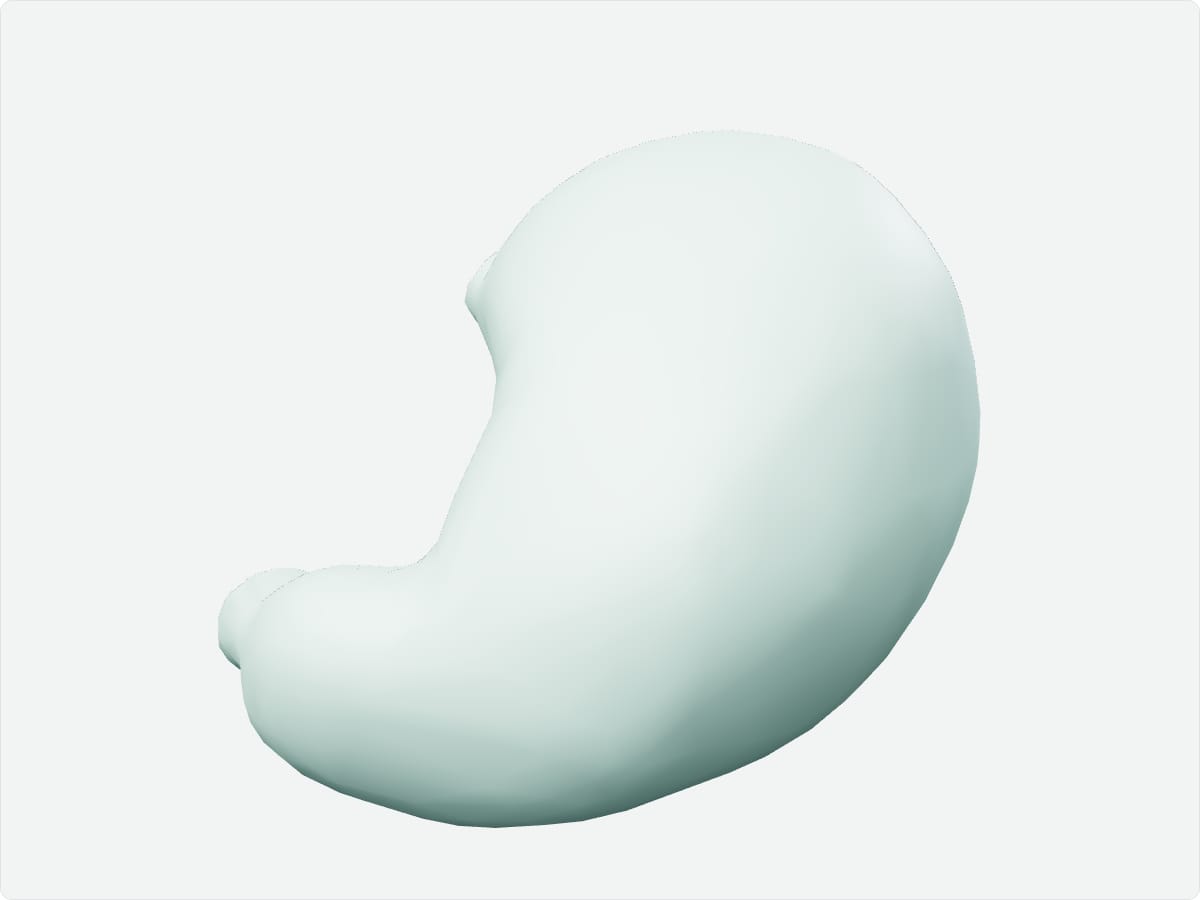
The stomach is a J-shaped muscular sac between the esophagus and the duodenum. It stores food, mixes it with acid and enzymes and releases chyme into the small intestine. Its regions are the cardia, fundus, body and pylorus, and the vagus nerve and celiac trunk branches supply it.
Key facts
Location
Left upper abdomen, under the left dome of the diaphragm.
Structure
Cardia, fundus, body, pyloric antrum and pylorus; greater and lesser curvatures; rugae; muscular wall with an extra oblique layer.
Function
Stores and churns food, secretes hydrochloric acid, pepsin and intrinsic factor, and regulates gastric emptying.
Blood supply
Left and right gastric, left and right gastro-omental, and short gastric arteries from the celiac trunk.
Innervation
Vagus nerves (parasympathetic) and the celiac plexus (sympathetic).
3D model: BodyParts3D (CC BY 4.0), adult male reference anatomy. Highlighted structure shown with nearby bones for context.
About the stomach
The pyloric sphincter controls the passage of food into the duodenum. The gastroesophageal junction has a physiological sphincter that helps to prevent reflux.
Clinical relevance
Peptic ulcers are commonly associated with Helicobacter pylori infection or NSAID use.
A posterior gastric ulcer can erode the splenic artery.
Frequently asked questions
What are the parts of the stomach?
The cardia, fundus, body and pylorus.
What does the stomach secrete?
Hydrochloric acid, pepsinogen, mucus, intrinsic factor and hormones such as gastrin.