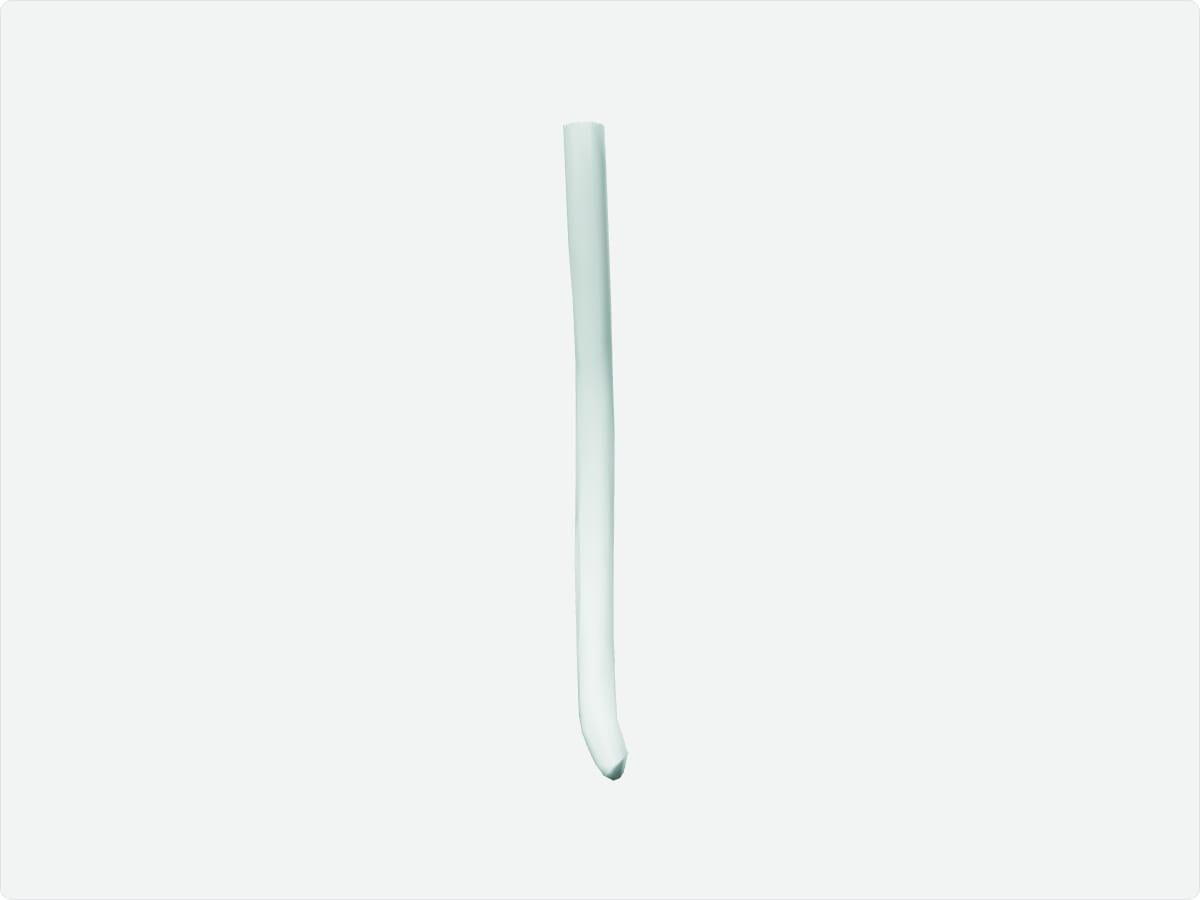
The esophagus is a muscular tube about 25 centimetres long that carries food from the pharynx to the stomach. It begins at the level of C6, passes through the thorax behind the trachea and heart and enters the abdomen through the diaphragm at T10. Peristalsis moves food downward.
Key facts
Location
From C6 to T11, behind the trachea and left atrium, in front of the vertebral column.
Structure
Cervical, thoracic and abdominal parts; upper (skeletal) and lower (smooth) muscle; upper and lower esophageal sphincters.
Function
Transports swallowed food and liquid to the stomach by peristalsis.
Blood supply
Inferior thyroid arteries, esophageal branches of the aorta and left gastric artery.
Innervation
Vagus nerves and sympathetic trunks, with the esophageal plexus.
3D model: BodyParts3D (CC BY 4.0), adult male reference anatomy. Highlighted structure shown with nearby bones for context.
About the esophagus
The esophagus has three normal constrictions: at its start (cricopharyngeus), where the aortic arch and left main bronchus cross it, and where it passes through the diaphragm.
Clinical relevance
Gastroesophageal reflux disease follows incompetence of the lower esophageal sphincter.
Swallowed foreign bodies often lodge at the normal constrictions.
Frequently asked questions
How long is the esophagus?
About 25 centimetres in adults.
Where does the esophagus pass through the diaphragm?