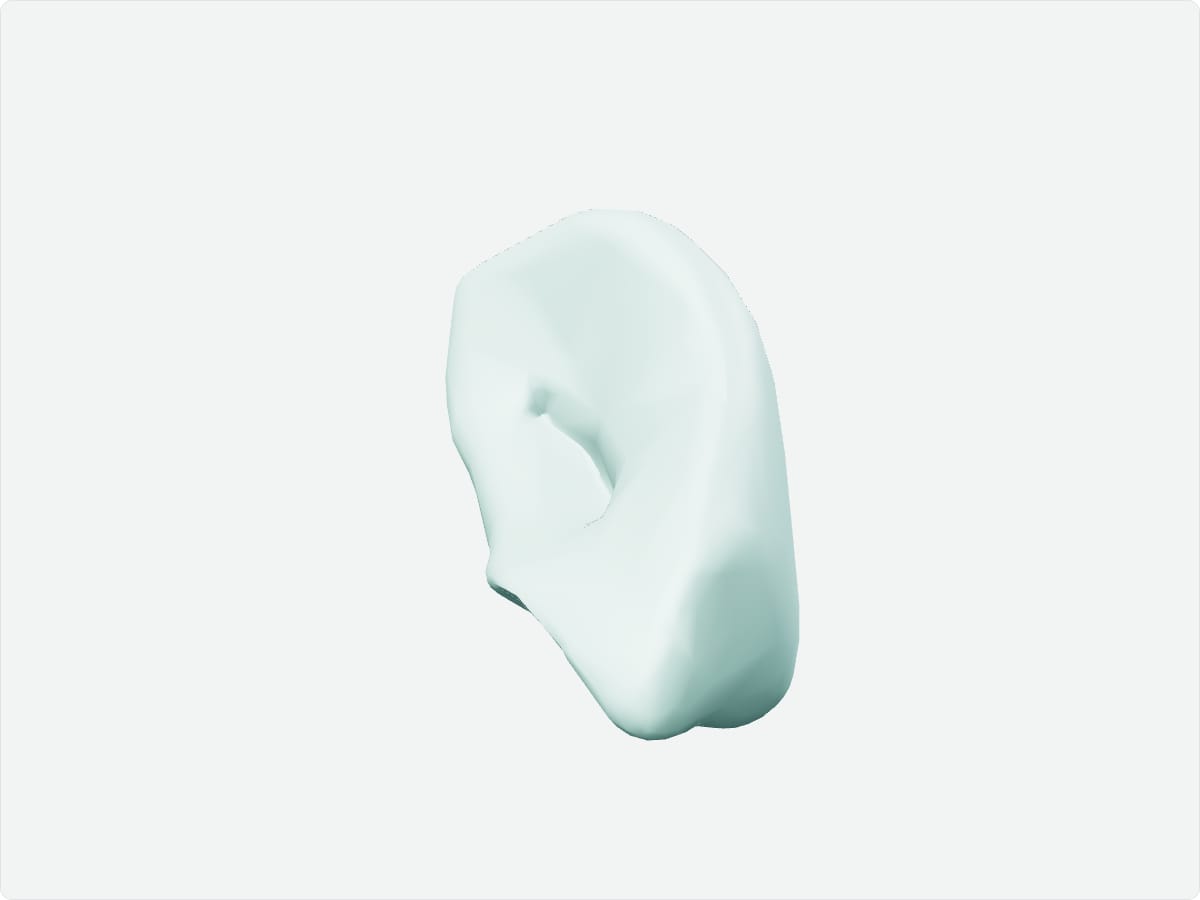
The spleen is the largest lymphoid organ, in the left upper abdomen behind the stomach and beneath the ribs. It filters blood, removes old red blood cells and takes part in immune responses. The splenic artery, a branch of the celiac trunk, supplies it.
Key facts
Location
Left hypochondrium, against the diaphragm, under ribs 9 to 11.
Structure
Red pulp for filtering blood, white pulp with lymphoid tissue, hilum for vessels, surrounded by a capsule.
Function
Filters blood, recycles iron from red blood cells, stores platelets and contributes to immune surveillance.
Blood supply
Splenic artery from the celiac trunk; drained by the splenic vein into the portal system.
Innervation
Celiac plexus.
3D model: BodyParts3D (CC BY 4.0), adult male reference anatomy. Highlighted structure shown with nearby bones for context.
About the spleen
The spleen is not essential for life, but people without a spleen are more susceptible to infections by encapsulated bacteria and receive vaccination advice.
Clinical relevance
Trauma to the lower left chest can rupture the spleen and cause life-threatening bleeding.
Splenomegaly can accompany liver disease, infection or blood disorders.
Frequently asked questions
Where is the spleen located?
In the left upper quadrant of the abdomen, behind the stomach and protected by the lower ribs.
Can you live without a spleen?
Yes, but the risk of certain serious infections is higher.