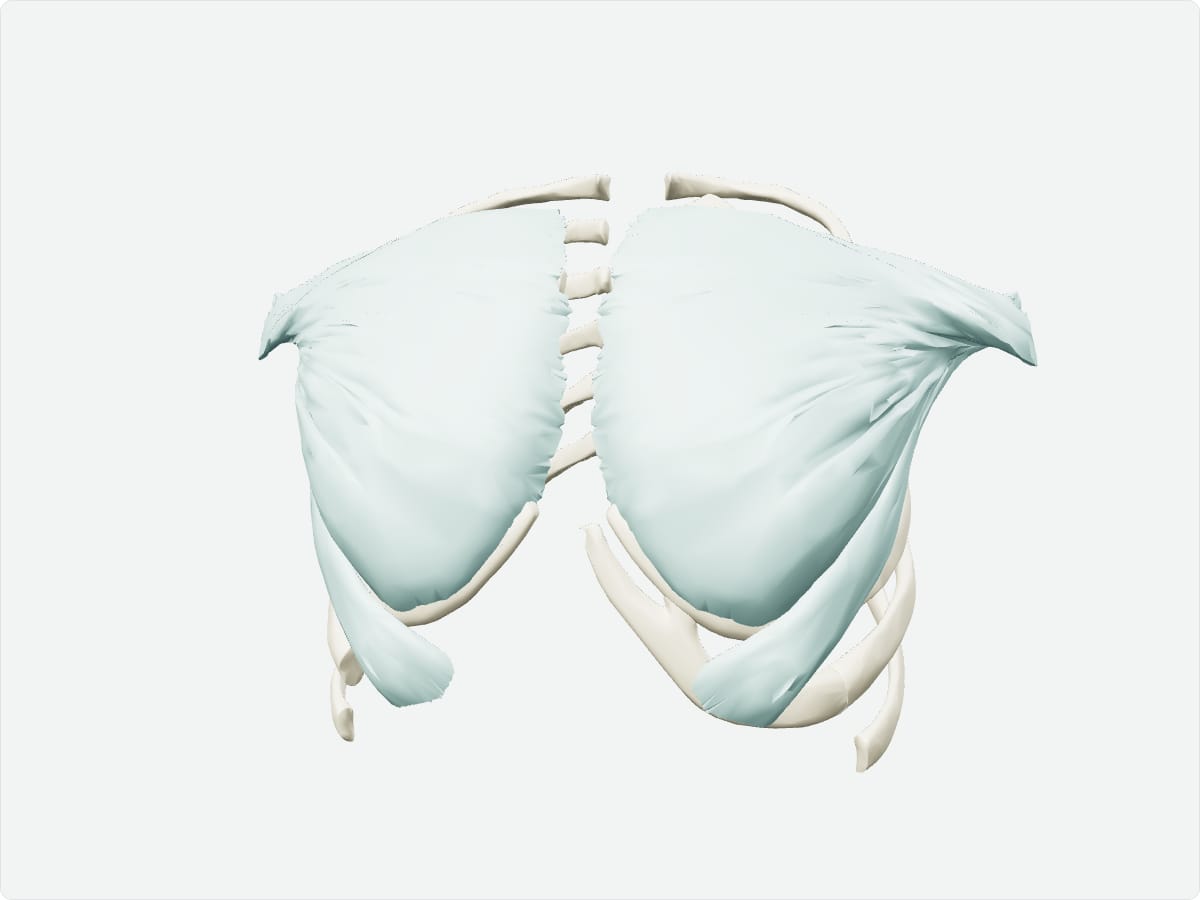
Pectoralis major: origin, insertion, nerve supply and action
Also called: pec major, chest muscle
Quick answer
The pectoralis major is the large fan-shaped muscle of the upper chest. The clavicular head arises from the medial clavicle and the sternocostal head from the sternum and upper costal cartilages. Both insert on the lateral lip of the intertubercular sulcus of the humerus. The medial and lateral pectoral nerves supply it, and it adducts and medially rotates the arm.
Key facts
Origin
Clavicular head: medial half of the clavicle. Sternocostal head: anterior sternum, upper six costal cartilages and the aponeurosis of the external oblique.
Insertion
Lateral lip of the intertubercular sulcus of the humerus.
Innervation
Lateral and medial pectoral nerves (C5-T1).
Blood supply
Pectoral branch of the thoracoacromial artery and perforating branches of the internal thoracic artery.
Action
Adducts and medially rotates the arm; the clavicular head flexes the arm and the sternocostal head extends it from a flexed position.
3D model: BodyParts3D (CC BY 4.0), adult male reference anatomy. Highlighted structure shown with nearby bones for context.
About the pectoralis major
The pectoralis major forms the anterior wall of the axilla. Its lower border creates the anterior axillary fold, and the muscle lies over the pectoralis minor and the ribs.
Both sides of the body are shown in the 3D model because the atlas models the left and right muscles separately.
Clinical relevance
Pectoralis major rupture typically occurs at the humeral insertion during heavy bench pressing.
Congenital absence of the sternocostal head is a feature of Poland syndrome.
Frequently asked questions
What are the two heads of pectoralis major?
The clavicular head from the medial clavicle and the sternocostal head from the sternum and costal cartilages.