Coracobrachialis: origin, insertion, nerve supply and action
Also called: coracobrachialis muscle
Quick answer
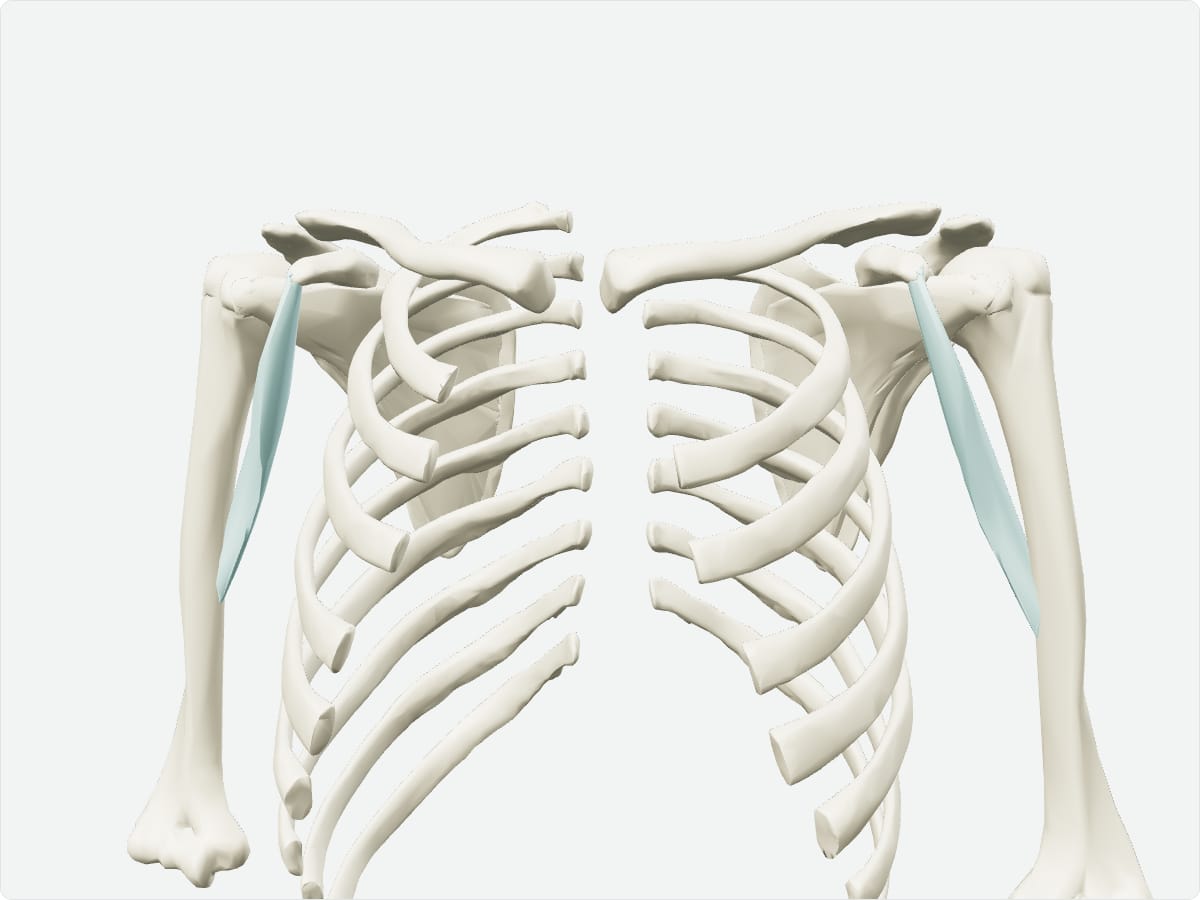
The coracobrachialis is a slender muscle in the upper medial arm. It arises from the tip of the coracoid process of the scapula and inserts on the middle third of the medial humerus. The musculocutaneous nerve pierces and supplies it, and it flexes and adducts the arm at the shoulder.
Key facts
Origin
Tip of the coracoid process of the scapula (with the short head of biceps).
Insertion
Middle third of the medial surface of the humeral shaft.
Innervation
Musculocutaneous nerve (C5-C7).
Blood supply
Muscular branches of the brachial artery.
Action
Flexes and adducts the arm at the shoulder; helps resist dislocation of the humeral head.
3D model: BodyParts3D (CC BY 4.0), adult male reference anatomy. Highlighted structure shown with nearby bones for context.
About the coracobrachialis
The coracobrachialis forms a landmark in the axilla and upper arm: the musculocutaneous nerve pierces the muscle and the brachial artery runs along its medial border.
Its tendon of origin fuses with the short head of the biceps brachii.
Clinical relevance
The point where the musculocutaneous nerve pierces the muscle is a site where the nerve can be stretched or compressed.
Frequently asked questions
Which nerve passes through the coracobrachialis?
The musculocutaneous nerve pierces the muscle and supplies it.
What does the coracobrachialis do?
It flexes and adducts the arm at the shoulder joint.