Supraspinatus: origin, insertion, nerve supply and action
Also called: supraspinatus muscle, rotator cuff supraspinatus
Quick answer
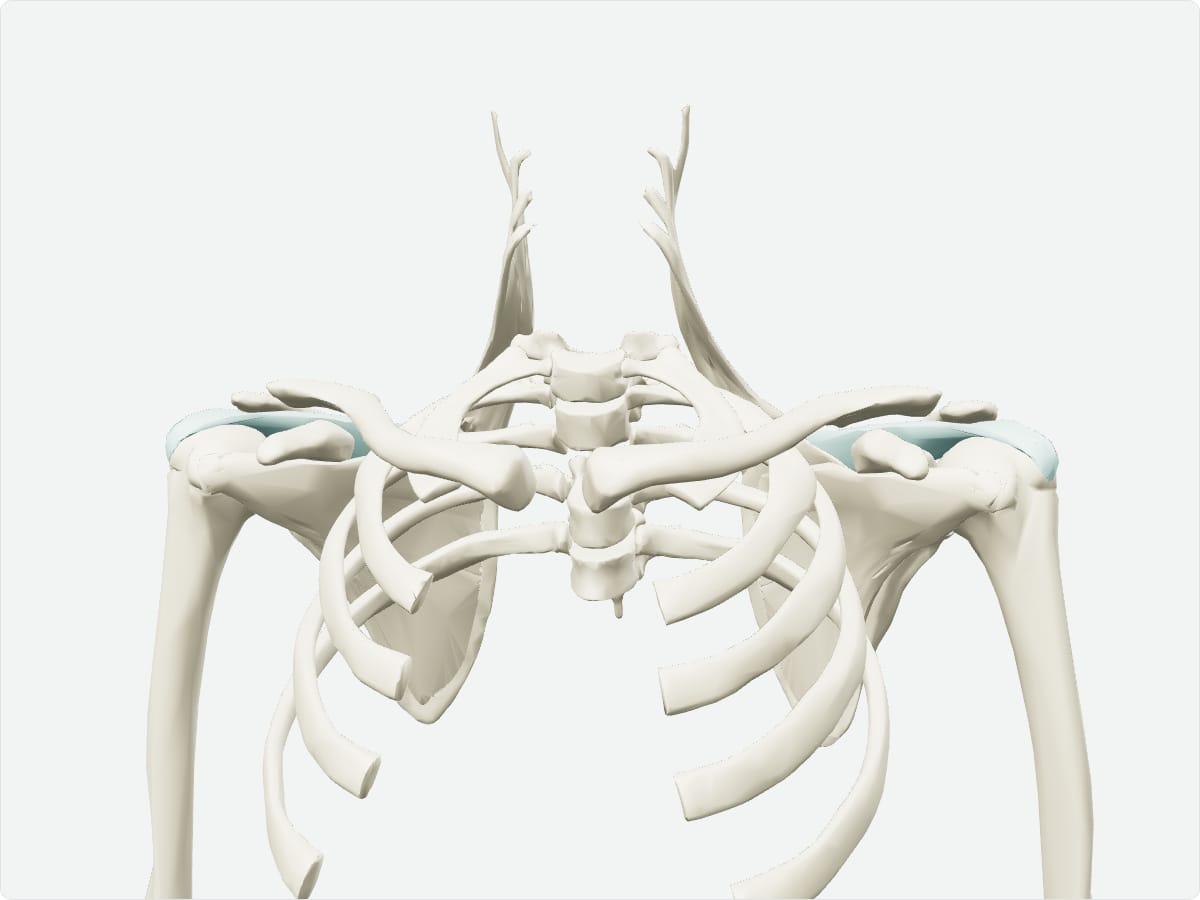
The supraspinatus is a rotator cuff muscle above the spine of the scapula. It arises from the supraspinous fossa and inserts on the superior facet of the greater tubercle of the humerus. The suprascapular nerve supplies it. It starts arm abduction in the first 15 degrees and holds the humeral head in the glenoid cavity.
Key facts
Origin
Supraspinous fossa of the scapula.
Insertion
Superior facet of the greater tubercle of the humerus.
Innervation
Suprascapular nerve (C5-C6).
Blood supply
Suprascapular artery.
Action
Initiates abduction of the arm and stabilises the head of the humerus in the glenoid cavity.
3D model: BodyParts3D (CC BY 4.0), adult male reference anatomy. Highlighted structure shown with nearby bones for context.
About the supraspinatus
Its tendon passes beneath the acromion and coracoacromial arch through the subacromial space, which is why it is the rotator cuff tendon most prone to impingement and tears.
Together with infraspinatus, teres minor and subscapularis it forms the rotator cuff, a group of muscles whose tendons blend into the capsule of the shoulder joint.
Clinical relevance
Supraspinatus tendinopathy and tears are the most common cause of rotator cuff related shoulder pain, especially with repeated overhead activity.
The empty can (Jobe) test and drop arm test assess supraspinatus function.
Frequently asked questions
What are the origin and insertion of the supraspinatus?
It arises from the supraspinous fossa of the scapula and inserts on the superior facet of the greater tubercle of the humerus.
Which nerve supplies the supraspinatus?
The suprascapular nerve.
Is the supraspinatus part of the rotator cuff?
Yes. The rotator cuff comprises supraspinatus, infraspinatus, teres minor and subscapularis.