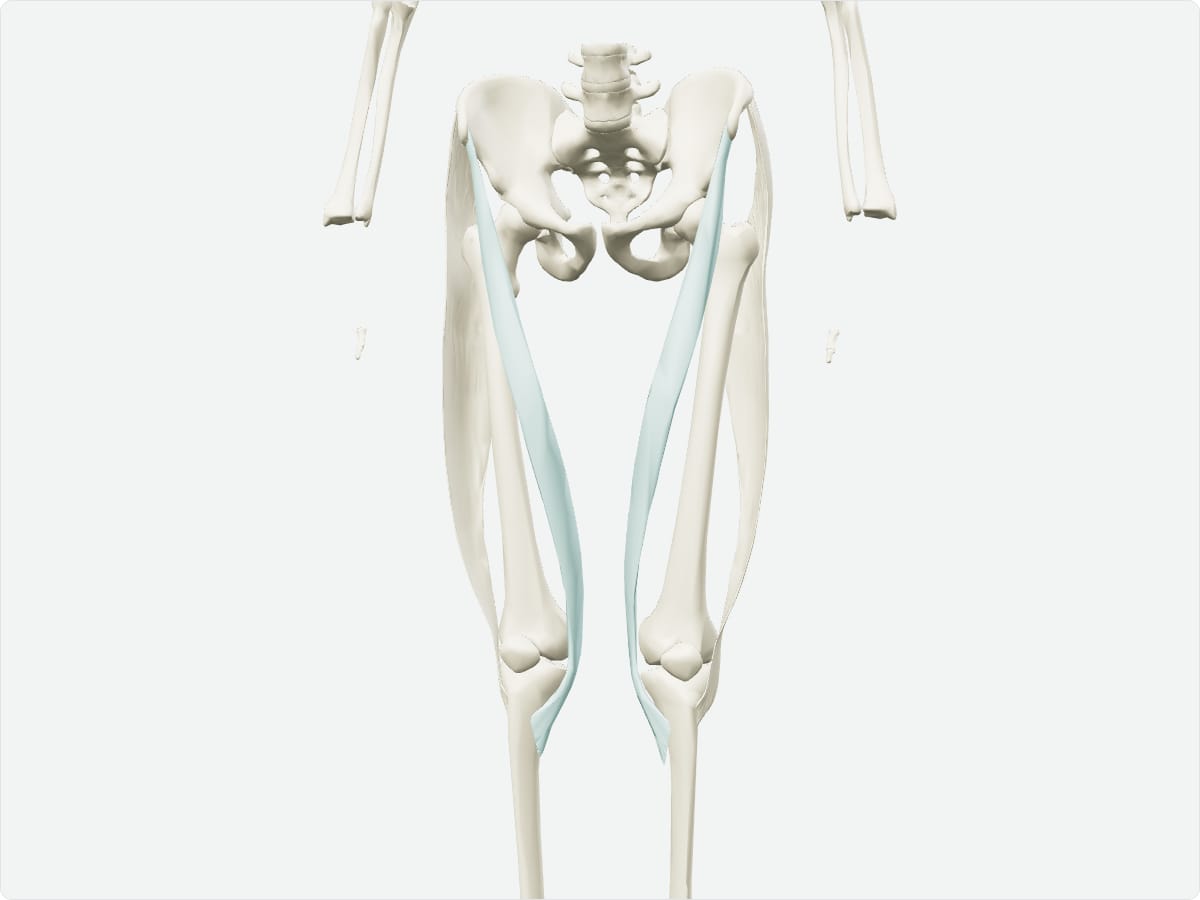
Sartorius: origin, insertion, nerve supply and action
Also called: tailor's muscle
Quick answer
The sartorius is the longest muscle in the body and runs obliquely across the front of the thigh. It arises from the anterior superior iliac spine and inserts on the upper medial tibia at the pes anserinus. The femoral nerve supplies it, and it flexes, abducts and laterally rotates the hip and flexes the knee.
Key facts
Origin
Anterior superior iliac spine.
Insertion
Superior part of the medial surface of the tibia (pes anserinus).
Innervation
Femoral nerve (L2-L3).
Blood supply
Muscular branches of the femoral artery.
Action
Flexes, abducts and laterally rotates the hip and flexes the knee, as in sitting cross-legged.
3D model: BodyParts3D (CC BY 4.0), adult male reference anatomy. Highlighted structure shown with nearby bones for context.
About the sartorius
The sartorius forms the lateral border of the femoral triangle and the roof of the adductor canal, in which the femoral artery and vein travel.
Clinical relevance
It is used as a landmark for the adductor canal, and the muscle can be transposed to cover exposed vessels in reconstructive surgery.
Frequently asked questions
Why is the sartorius called the tailor's muscle?
Its combined actions place the leg in the cross-legged position historically used by tailors.
Where does sartorius insert?
On the medial surface of the upper tibia as part of the pes anserinus.