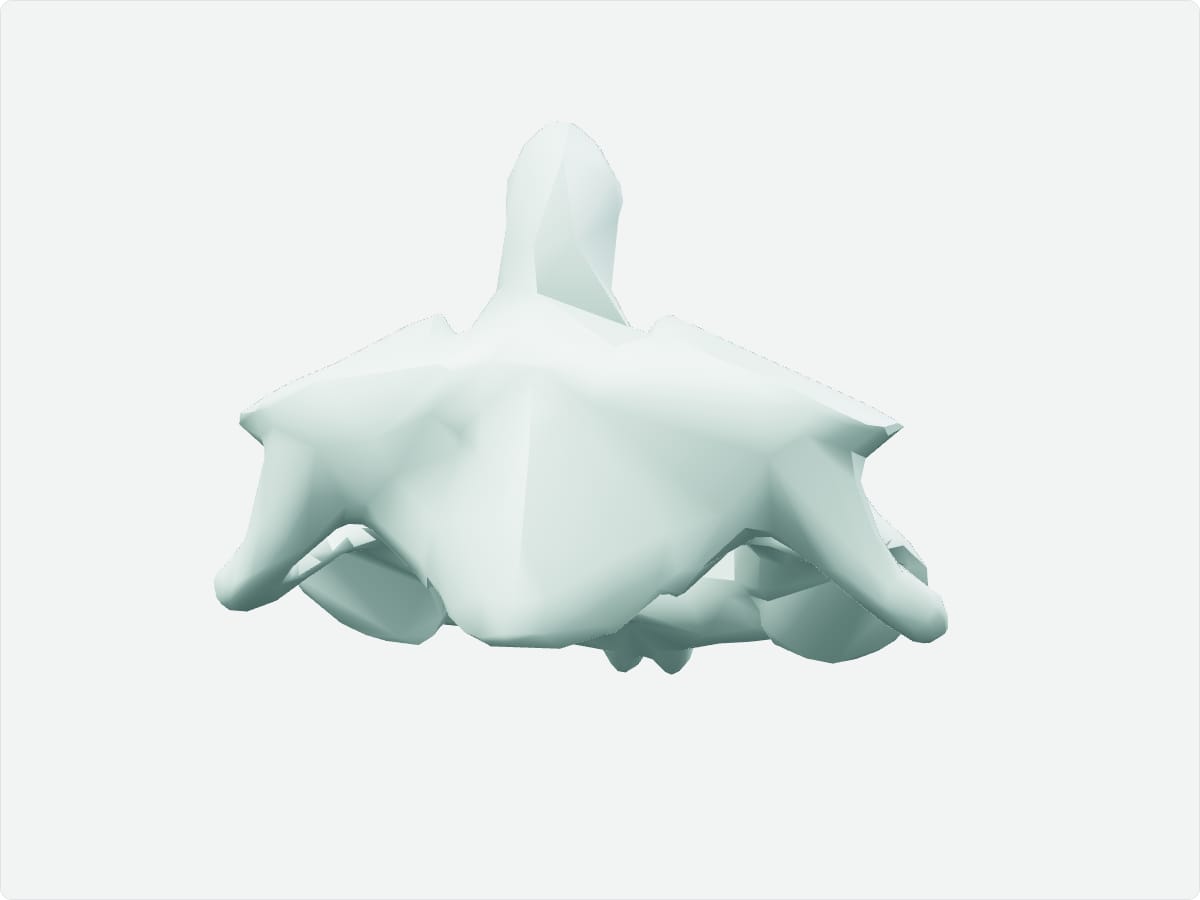
The axis is the second cervical vertebra (C2). Its distinctive feature is the dens, or odontoid process, a tooth-like projection that rises from the body and forms a pivot for the atlas. This pivot allows the head to rotate from side to side.
Key facts
Type
Irregular bone (vertebra).
Location
Second bone of the vertebral column, below the atlas.
Landmarks
Dens, body, spinous process, superior articular facets, transverse processes.
Articulations
Atlas (atlanto-axial joints) and C3 vertebra.
Muscle attachments
Obliquus capitis inferior, rectus capitis posterior major, longus colli, semispinalis cervicis.
3D model: BodyParts3D (CC BY 4.0), adult male reference anatomy. Highlighted structure shown with nearby bones for context.
About the axis (c2)
The alar and transverse ligaments hold the dens in position against the anterior arch of the atlas.
Clinical relevance
A fracture of the pars interarticularis of C2 is a hangman fracture.
Odontoid fractures can compromise the spinal cord and are classified into three types.
Frequently asked questions
What is the dens of the axis?
A tooth-shaped projection from the body of C2 that acts as the pivot for rotation of the atlas and head.
What movement occurs at the atlanto-axial joint?
Rotation of the head, as in shaking the head to say no.